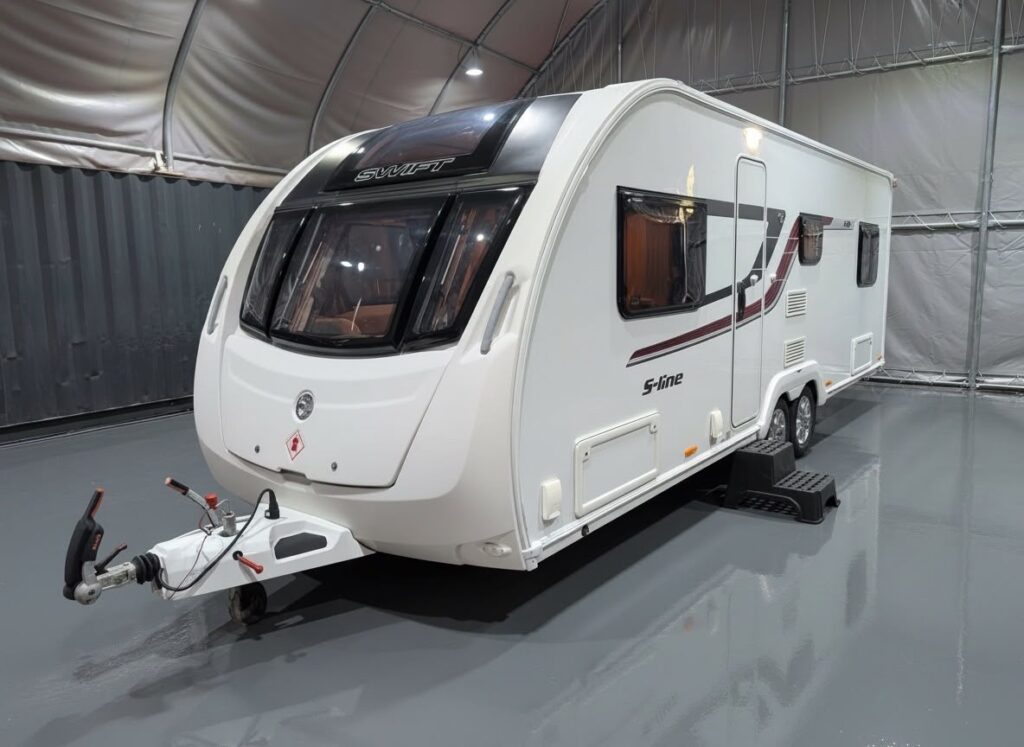
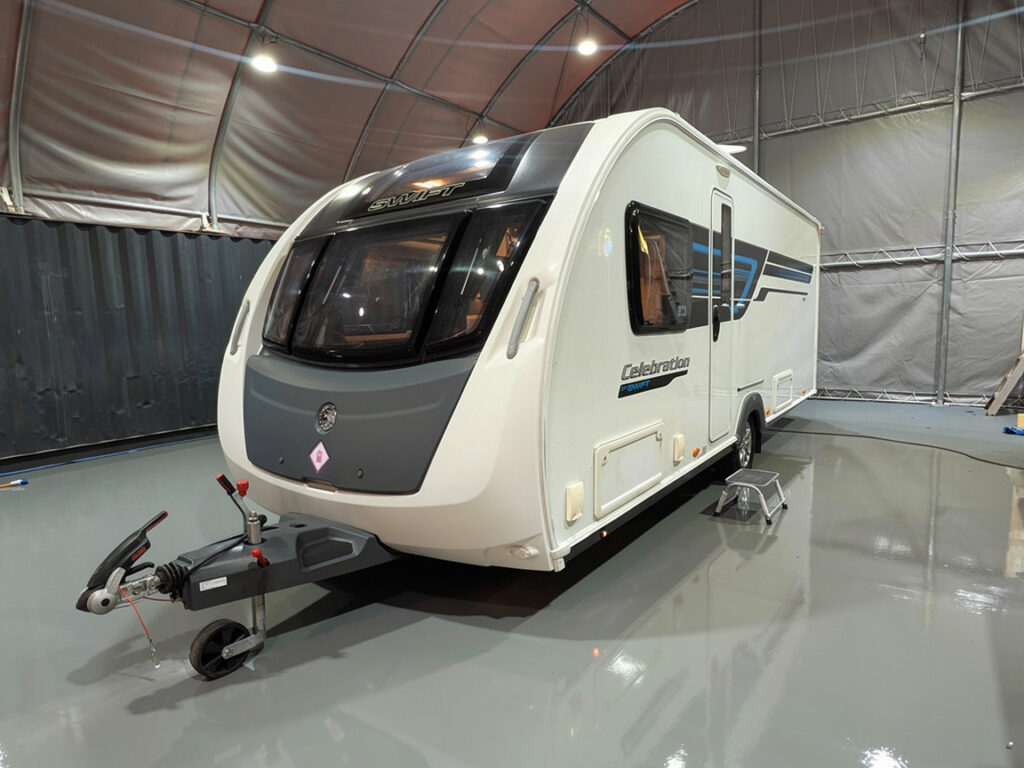
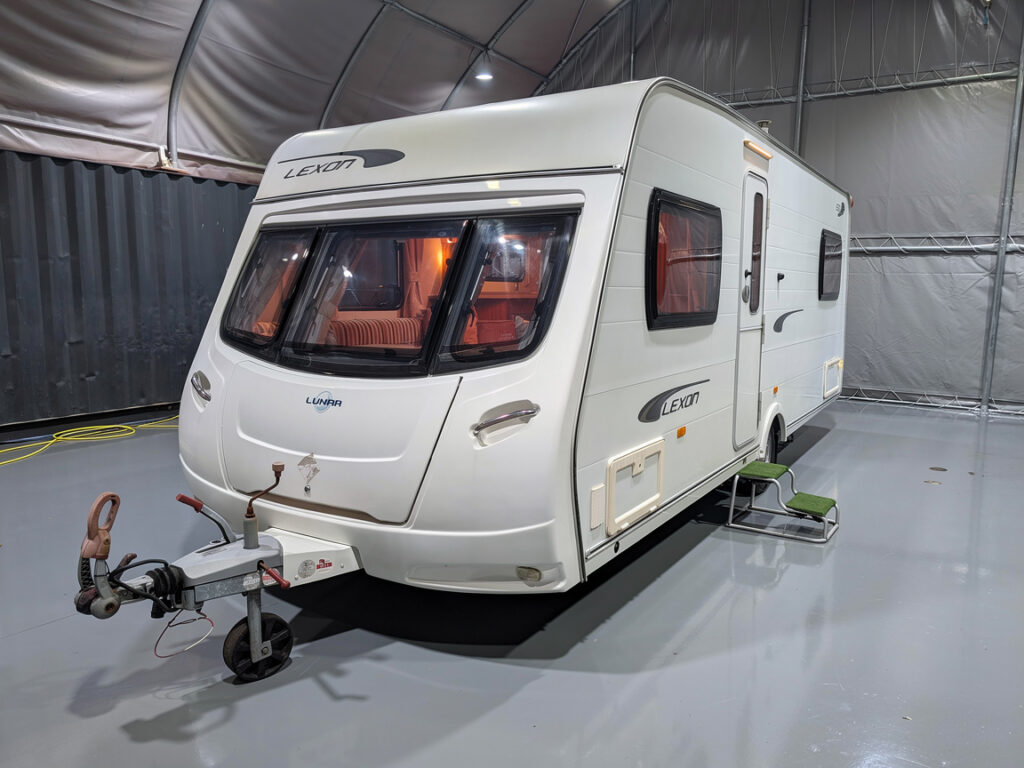
We sell your caravan for you at a retail price, from our own forecourt. A commission is deducted only when it sells, and the caravan stays legally yours until then.
Caravan sale or return means a dealer sells your caravan for you and takes an agreed commission out of the sale price. Your caravan goes onto our forecourt, it is marketed as our own stock, and it is sold at a figure the two of us set first. The commission is deducted only when it sells, and the balance is yours. Until that moment the caravan belongs to you.
The difference from an outright sale is the price the caravan is aimed at. A dealer buying it outright pays a trade price, because the money leaves the business that day and every risk transfers with it. On brokerage, your caravan is priced to sell retail — the same as everything else in the yard.
That gap between trade and retail is the entire reason this service exists. It is also why the route takes longer. If the money matters more than the maximum, an outright offer is the better answer, and you can start with a straight sale instead.
Three stages, and only one of them needs anything from you.
The caravan is inspected properly. A damp meter goes round the window surrounds and lockers, the bed boxes are lifted, and the chassis number is checked against the CRIS document. Then we agree what it goes on sale at.
Your caravan is photographed, written up and listed alongside our own stock, then parked where buyers walk. Enquiries, viewings and the usual run of tyre-kickers are dealt with at Bayley Street. You hear from us, not from them.
Every offer is put to you before anything is accepted. Once a sale completes, the agreed commission is deducted and the balance is transferred to your bank. Outstanding finance can be settled directly from the proceeds.
Three honest ways to sell the same caravan. None of them wins for everybody.
| What matters | Sale or return | Outright sale to us | Private sale |
|---|---|---|---|
| Price it aims at | Retail forecourt price | Trade price | Somewhere between the two |
| When you get paid | After it sells | On collection | When the buyer's money clears |
| Is a sale certain? | No | Yes, once agreed | No |
| Who handles viewings | We do, here | Nobody — one collection | You do, at home |
| Who owns it meanwhile | You do | We do, from collection | You do |
| Where it is advertised | Our forecourt and website | Not applicable | Listing sites you pay for |
| Buyer gets a dealer behind it | Yes | Yes | No |
| Suits you if | You have time and want the higher figure | You want it gone and paid for | You enjoy selling and have the patience |
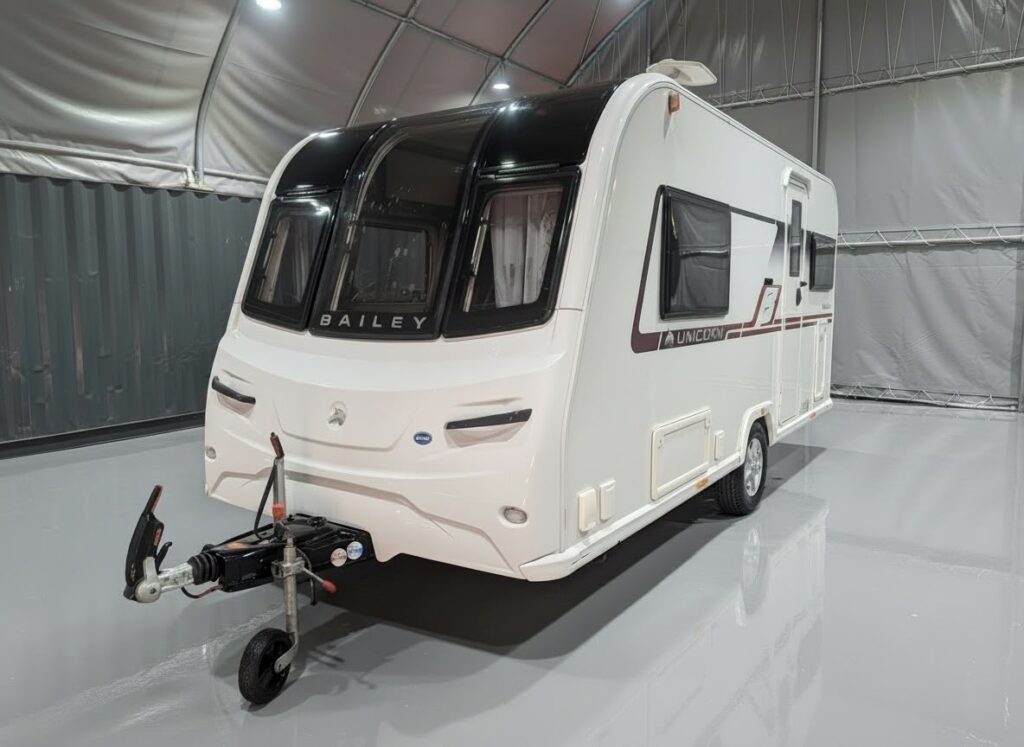
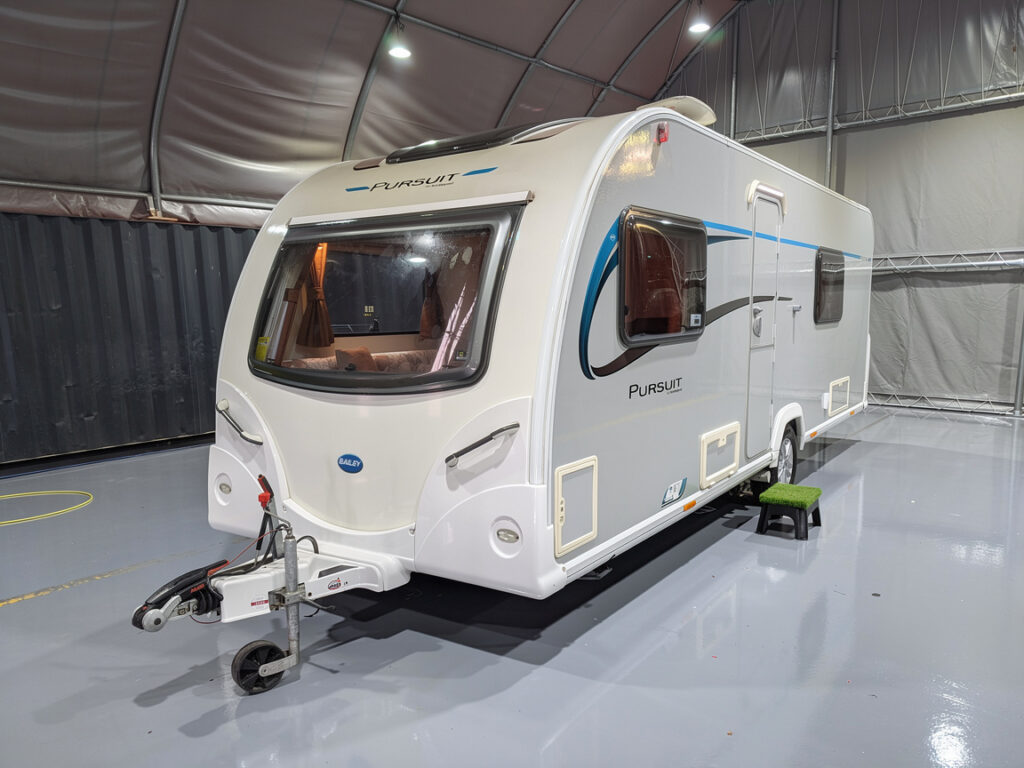
Owners rarely see the retail end of the market, only the offers made to them. So here is a real one, live on our site as you read this.
Listed at Bayley Street, Stalybridge
That figure is a prepared, photographed, listed price with a dealer standing behind it. A trade offer on the same caravan is always lower, because the buyer is carrying the cost of doing all of that and the risk of it sitting. Brokerage is how an owner reaches for the retail figure instead — minus commission, and minus the certainty of a quick sale.
These are the checks a buyer makes, in the order they make them.
Readings under 15% around window surrounds and lockers are generally accepted. Above 20% suggests active ingress, and buyers walk. Delamination or a soft floor is a retail dead end.
A documented habitation check every year is worth real money at resale. Bring the stamped book and the invoices. Gaps get discounted, and they get discounted harder than the repair would have cost.
Fixed island beds, French beds and bunks each have their own queue of buyers. A four berth with a fixed bed and an end washroom moves faster than a lounge conversion of the same age.
MTPLM is the fully loaded legal limit, MiRO is the empty weight, and the difference is your payload. A caravan most family cars can legally tow at the 85% guideline sells to a far wider audience.
A fitted motor mover commonly adds £700 to £1,200 to the achievable price. Alde wet heating, AL-KO ATC stability control and a decent hitch all get noticed on a forecourt walk-round.
CRIS document, chassis number etched on the A-frame, receipts, handbooks and both keys. A missing CRIS document does not stop a sale, but it slows one down and it worries buyers.
Sale or return caravan dealers all work slightly differently, and brokerage in the UK is not a standardised contract. Two yards ten miles apart will hand you two different agreements. Ask any of us for these seven, in writing, before the caravan leaves your drive.
Any dealer worth handing a £12,000 asset to will put all seven in front of you without being asked. If ours are not clear, say so and we will go through them line by line — 0161 464 0109.
We would rather tell you now than take up half your season proving it.
In any of those cases the honest answer is a straight sale, and we would still like to make you an offer. Compare the ways of selling your caravan before you decide.
The company yours would be parked alongside, and the prices it would be judged against.
Sale or return means a dealer sells your caravan for you and takes an agreed commission out of the sale price. You keep ownership the whole time it is on the forecourt. The caravan is priced to sell retail rather than bought from you at trade money, which is why owners usually end up with more. Consignment and brokerage are the same arrangement under different names.
Commission is agreed before your caravan comes onto the forecourt and it is written into your agreement. Across the trade it is quoted either as a percentage of the sale price or as a fixed fee, and VAT may sit on top. Ask any dealer, us included, for the figure in writing — and ask whether valeting, photography and preparation are inside it. Call 0161 464 0109 for ours.
Honestly, it varies, and nobody can promise you a date. Price is the biggest factor: a caravan set at the market sells; one set at what the owner hoped for sits. Season matters too, as January to March is when buyers come looking. Layout and berth count as well — fixed beds and family four berths move quicker than niche layouts.
Because you still own it, your own policy normally needs to stay in place until the caravan sells. Ring your insurer and confirm you are covered while it is parked on a dealer's premises rather than at home or in storage — some policies treat that differently. Then get the dealer's position in writing too. This is the question owners forget to ask.
Yes. The caravan remains your property throughout, so it stays yours to take home. What varies between dealers is the notice you need to give and whether anything is charged for work already carried out. Both points sit in the agreement, which is why reading it before you sign matters more than the headline commission rate.
Usually yes, but you wait for it. An outright offer is a trade price paid on collection, with no risk to you at all. Sale or return aims at the retail price, then deducts commission, and pays you only once a buyer is found. You are trading certainty and speed for a higher number.
No, not once it is on the forecourt. It has to be available for viewings and kept in show condition, and a caravan that keeps disappearing for weekends will not sell. If you want one more season out of it, sell in the autumn instead, or take an outright offer at the end of the summer.
We sell motorhomes and campervan conversions alongside touring caravans, and there are usually several on the forecourt. Talk to us about what you have on 0161 464 0109 and we will tell you plainly whether brokerage or an outright offer suits it better.
Bring it to a forecourt that already sells Bailey, Swift, Elddis and Coachman every week. Ask us the awkward questions first — we would rather answer them now.
Enquire about sale or return Call 0161 464 0109