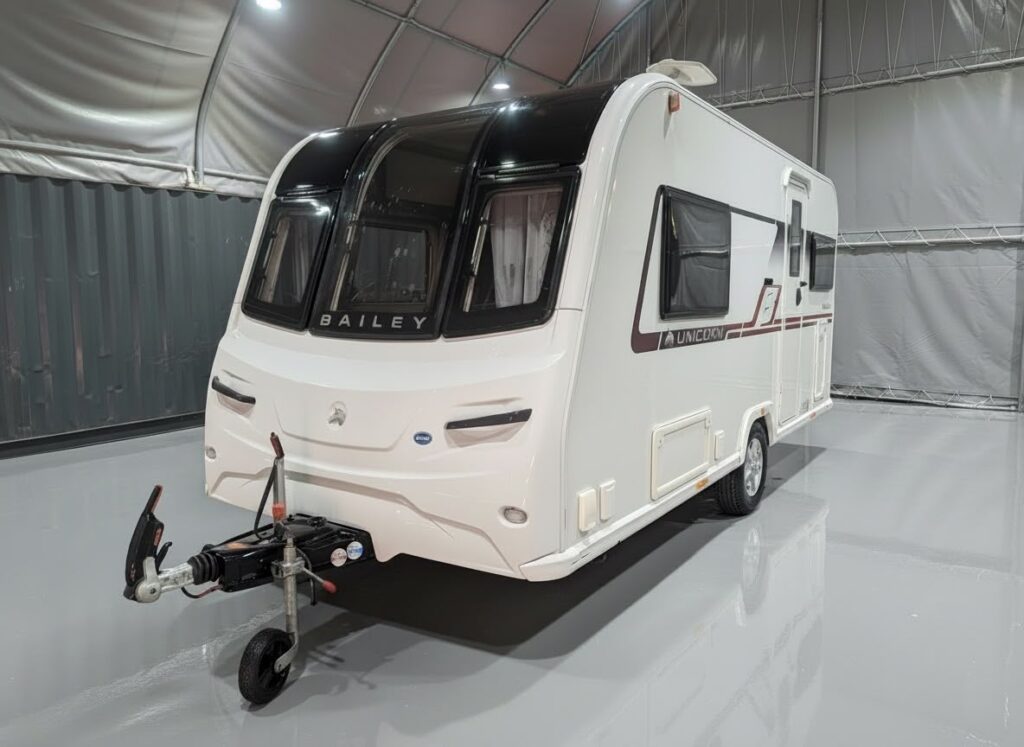
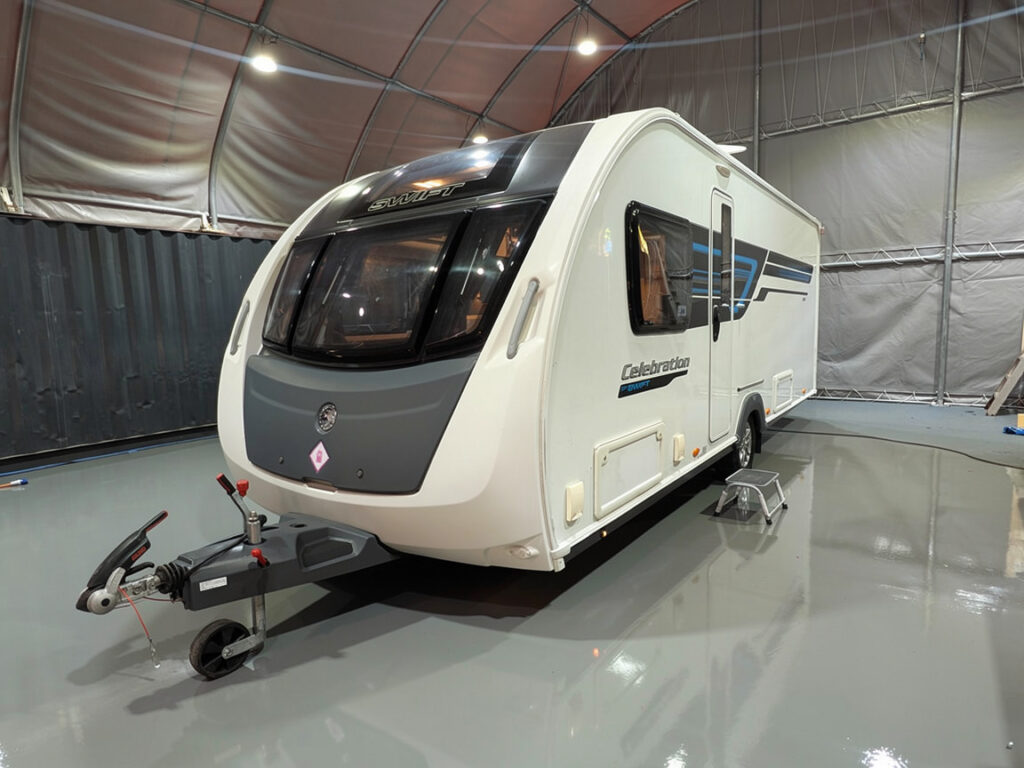
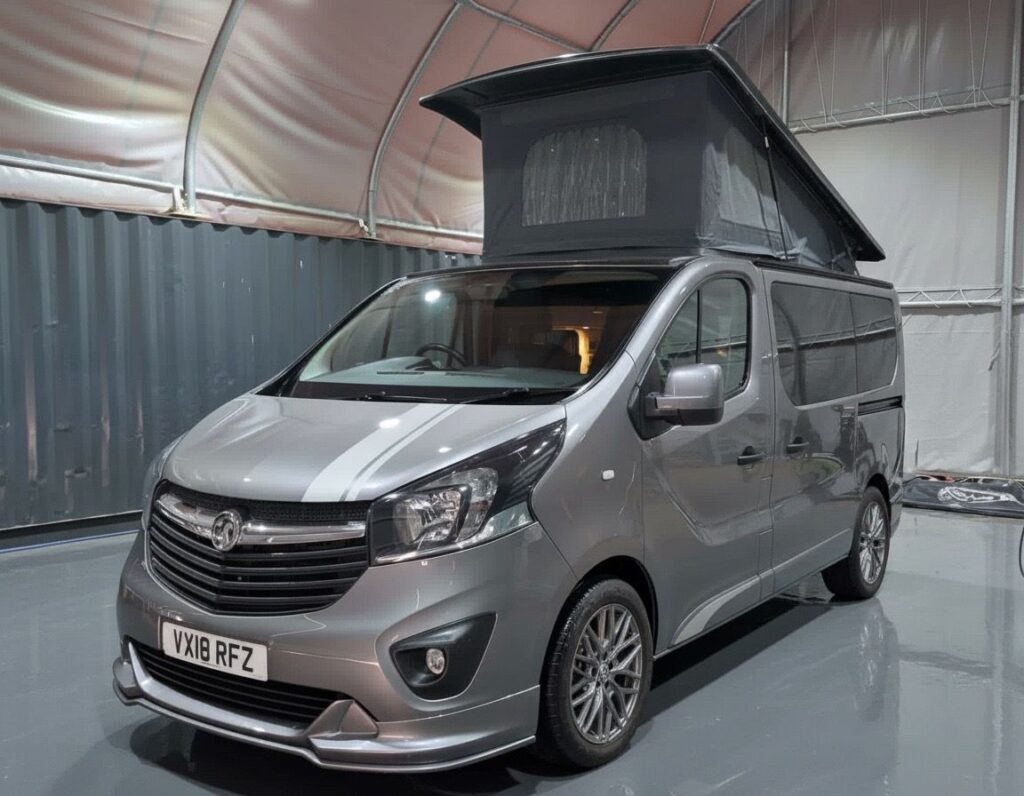
Trade your caravan in as part payment for one from our forecourt. We agree an allowance for yours, take it off the price, and you pay the difference.

Caravan part exchange is one of three ways to sell your caravan through us: you trade in the caravan you own as part payment for the next one. We agree an allowance for yours, take it off the price of the caravan you are buying, and you pay the difference. The trade simply calls it a PX deal.
It solves a timing problem that selling first cannot. Money from a sale that has not happened yet cannot be spent today. And nobody wants a summer with no caravan at all. Part exchange turns two transactions into one.
The catch is the figure. An allowance is a trade price, and it only means something next to the price of what you are buying. The section on the cost to change, further down, shows why that matters more than anything else on this page.
What happens once you have been in touch.
The make, model, year, berth and condition of yours — and the caravan, motorhome or campervan you have your eye on. Browse the stock first if you like; it helps to have a real price to work from.
A damp meter goes round the windows and lockers, and we lift the bed boxes. Then the chassis number is checked against the CRIS document. That turns a provisional figure into a firm one.
The allowance comes off the price of your next caravan and clears any finance on yours. You pay the balance. The old caravan stays here, and the new one goes home with you.
Most part exchange touring caravan deals are sold on the headline allowance. On its own, that number tells you almost nothing, because the same deal can be dressed up more than one way.
Take a caravan on our forecourt today, the 2016 Swift S-Line 630 at £12,995. Here are three ways a dealer could present a part exchange against it.
| Offer A | Offer B | Offer C, another dealer | |
|---|---|---|---|
| How it is presented | "£8,000 for your caravan" | "£7,000 for yours and £1,000 off" | "£8,500 for your caravan" |
| Price of the caravan you are buying | £12,995 | £12,995 | £14,495 |
| Discount | None | − £1,000 | None |
| Allowance for yours | − £8,000 | − £7,000 | − £8,500 |
| You pay to change | £4,995 | £4,995 | £5,995 |
The £12,995 is a real forecourt price. The allowances and Offer C are illustrative, not offers.
Offers A and B are the same money, presented differently. Offer C has the biggest allowance on the table and is the most expensive deal of the three, by £1,000.
So ask every dealer the same question: what do I pay to change? Compare that figure, on caravans of similar age and layout, and ignore the rest. A generous allowance on an over-priced caravan is not generous.
If you are buying another caravan anyway, these are the three realistic ways to do it. Each suits a different owner.
| What matters | Part exchange | Sale or return, then buy | Sell privately, then buy |
|---|---|---|---|
| Price for your caravan | A trade allowance | Retail, less commission | Whatever a private buyer pays |
| Timing | One transaction | Wait for a sale, then buy | Wait for a sale, then buy |
| Risk of a gap with no caravan | None | Real | Real |
| Viewings | None | Handled by the dealer | At your home |
| Finance on your caravan | Settled from the allowance | Settled from the sale | You arrange it with the lender |
| Suits you if | You are buying anyway and want it simple | You can wait and want the most for yours | You have the time and want to do it yourself |
Selling on sale or return usually gets more for the caravan itself. Part exchange usually gets you into the next one sooner and with less fuss. Neither is wrong — they answer different questions.
A dealer values a part exchange on one question: how easily can it be sold on? Everything below feeds into the answer.
A figure agreed from a description is provisional. One agreed after the caravan has been inspected is the number you can actually plan around.
Readings under 15% round the windows and lockers are generally accepted. Above 20% points to active ingress, and the allowance has to cover the repair.
Popular layouts move fastest: fixed beds, end washrooms and family four berths. A niche layout can be a lovely caravan and still be slower to sell on.
A stamped book and a recent habitation check answer the dealer's first questions before they are asked. Gaps in the history cost you.
A fitted motor mover commonly adds £700 to £1,200 to what a caravan can achieve. Not every dealer credits extras the same way, so ask how yours are being valued.
The allowance clears any outstanding finance, so ask your lender for a settlement figure early. The CRIS document proves the caravan is yours to trade.
A familiar complaint about part exchange is a figure that drops at handover. It is almost always avoidable.
The surest way to keep the figure is to have your caravan seen before the deal is agreed. Bring it to Bayley Street first, and the allowance is based on the caravan itself, not a description. Or ring 0161 464 0109 to talk it through.
Swapping a tourer for a motorhome or campervan is a part exchange like any other. The caravan's allowance comes off the price of the motorhome, and you pay the difference in exactly the same way.
Two things are different. The vehicle you are buying needs its MOT, V5C and base-vehicle history checked as well as the habitation side. And motorhome stock moves faster than caravans, so see what is on the forecourt now or ring before planning around a particular one.
A newer tourer, a different layout, or a campervan. Three from the forecourt today.
You trade in your current caravan as part payment for another one from a dealer's stock. The dealer agrees an allowance for yours, takes it off the price of the one you are buying, and you pay the difference. Any finance on your old caravan is settled out of the allowance.
Yes. A touring caravan can go in part exchange against a motorhome or campervan, just as it can against another caravan. Motorhome stock turns over quickly here, so ring 0161 464 0109 to see what is in before you plan around a particular vehicle.
Not usually. The difference is normally paid when the deal completes, around the day you collect. If a deposit is needed to hold the caravan you are buying, it is agreed at the start and comes off the balance. Get the full breakdown in writing before you commit.
Usually, yes. The outstanding balance is settled with the finance company out of your part-exchange allowance, and the rest comes off the price of your next caravan. If you owe more than the caravan is worth, the shortfall has to be covered as part of the deal. Ask your lender for a settlement figure first.
Yes, if the caravan turns out not to be as described. Many part exchanges are agreed before the dealer has seen the caravan, and the figure is checked against its condition on the day. Having it inspected first, and describing it honestly, is the surest way to keep the number you were given.
For the caravan alone, usually yes, because an allowance is a trade figure. What you get in return is one transaction, no viewings, no gap between caravans and finance handled for you. Judge the deal on what you pay to change, not on the allowance by itself.
Say so at the start. Damp moves a part-exchange figure more than anything else, and it is far better priced in at the beginning than discovered on handover day. Depending on how serious it is, an outright sale can make more sense than a part exchange.
Your caravan's make, model, year, berth and condition, plus the one you have your eye on. We will come back with what you would pay to change.
One figure, in writing, for moving from the caravan you have to the one you want. Ask for it before you look at anything else.
Get my cost to change Call 0161 464 0109