
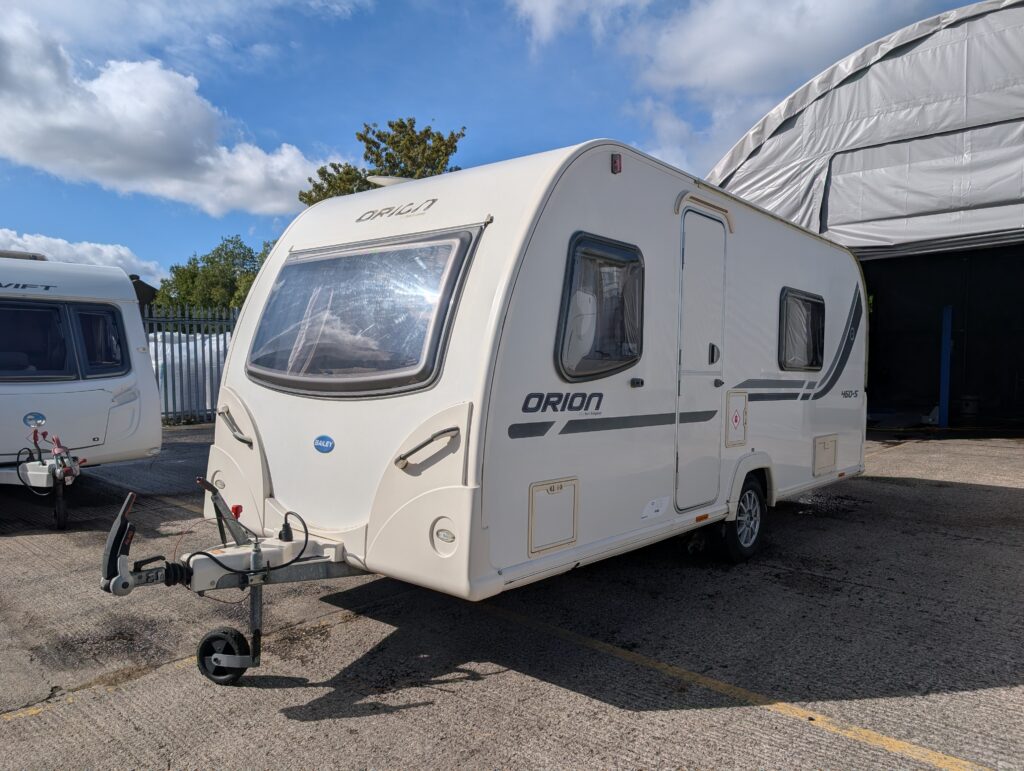
The best way to sell a caravan depends on what you want most: the highest price, the quickest sale or the least effort. A private sale or sale or return usually gets the most money. An outright sale to a dealer is the fastest and simplest, and part exchange wins if you are buying another caravan anyway.
No single route suits every owner, and it is worth being wary of anyone who says otherwise. We offer three of the six routes ourselves, so the comparison below deliberately includes the ones we do not.
The short version
- Most money: a private sale or sale or return, because both are aimed at retail prices.
- Quickest: an outright sale to a dealer, which can complete within days.
- Least effort: any dealer route. A private sale puts every call, viewing and payment check on you.
- Buying again: part exchange, judged on what you pay to change.
- The deciding number: the gap between the trade offer and the retail price. When it is small, take the certainty.
If you already know you would rather a dealer handled it, see the three ways to sell your caravan through us. Otherwise, the table below sets all six routes side by side.
Six ways to sell a caravan, compared
| Route | Price it aims at | Speed | Your effort | Main drawback | Suits you if |
|---|---|---|---|---|---|
| Private sale | Close to retail | Weeks, slower in winter | High | Fraud risk and viewings at home | You have time and want the most money |
| Sale or return | Retail, less commission | Weeks to months | Low | No guaranteed sale | You want retail money without the viewings |
| Outright sale to a dealer | Trade | Days | Low | A trade price, below retail | You want it gone and paid for |
| Part exchange | A trade allowance | The day you buy | Low | A big allowance can hide an overpriced caravan | You are buying another anyway |
| Online buying service | Trade, sometimes via a network | Days | Low | Figures often revised on inspection | You want a quick first figure |
| Auction | Whatever it makes, less fees | The next sale date | Medium | The price is unknown until the hammer falls | The caravan is unusual or a project |
The two routes that aim at retail money
Selling privately
A private sale usually gets the most money, because the buyer pays close to retail and nobody takes a cut. The work is the price of that: adverts, phone calls, viewings, negotiation and a payment you have to verify yourself. Most listing sites charge for a caravan advert, while Facebook Marketplace is free but leaves all the sifting to you.
The legal duty is light but real, because the caravan must match the way you described it. Serious buyers will also run a CRiS check for finance, theft and insurance write-offs. The main risks are payment fraud and strangers at your home, and both can be avoided with a few firm rules.
Sale or return
Sale or return, also called brokerage or consignment, puts your caravan on a dealer’s forecourt at a retail price. The viewings and the buyers are handled by the dealer, and an agreed commission is deducted only when it sells. Until then, the caravan is still legally yours.
The trade-offs are time and certainty. A sale is never guaranteed, and you wait for a buyer rather than being paid on collection. Before you sign, ask how the commission is worked out, who insures the caravan while it is on display, and what happens if it does not sell. Our worked example shows when brokerage beats an outright offer, and when it does not.
The three routes that pay a trade price
A trade price sits below retail for a reason. The dealer pays on the day the caravan leaves your drive. The preparation, the warranty a retail buyer expects and the risk of it sitting on the forecourt are then carried by the dealer. Those costs come out of the figure you are offered.
Outright sale to a dealer
This is the quickest certain sale. A dealer buying for their own stock can usually give you a figure within a day. Payment is made on collection, so there are no adverts, no viewings and no payment to verify. With us, collection is free within 150 miles of Stalybridge, and payment is made by bank transfer before the caravan leaves.
It is also the simplest route when finance is still owed, because the balance can be settled from the sale. What you give up is the gap between trade and retail, and on a newer caravan that gap can be worth chasing.
Part exchange
Part exchange turns selling and buying into one transaction, with no gap between caravans. The allowance for yours is taken off the price of the next one, and any finance on it is cleared from that allowance.
Judge a part exchange on what you pay to change, not on the allowance. A generous allowance on an overpriced caravan is not generous. Compare the cost to change on caravans of a similar age and layout, and ignore the headline figures.
Online caravan buying services
Some online buyers are dealers buying for their own stock. Others pass your details to a network of traders, and the figure quoted online is often revised once someone has seen the caravan. Neither is wrong, but it helps to know which one you are dealing with.
Ask three questions before you fill in a form: are you the company buying it, do you have premises I can visit, and when exactly will the money be in my account? A genuine buyer answers all three without hesitating.
Auction: the outlier
An auction sets the price on the day, so the figure is not known until the hammer falls. Entry fees and commission are deducted from the result, and payment follows the sale. It can suit a project caravan, a rare model or an owner who wants a fixed date. However, the price is then set by whoever turns up that day.
How to choose the best way to sell your caravan
Five steps, and the first two do most of the work.
- Get a trade figure and a retail estimate for the same caravan. A dealer who offers both routes can give you both, which keeps the comparison fair.
- Work out the gap. Take the retail estimate, deduct any commission, then deduct what a private buyer is likely to haggle off. Compare what is left with the trade offer.
- Put a price on waiting. Add up the insurance, storage and any finance interest for the months a private or brokerage sale might take.
- Check the calendar. Buyers are most active from February through the summer. Autumn and winter favour a quick trade sale, or a sale or return placement made before the new year.
- Choose the route whose downside you can live with. If the gap is smaller than the cost of waiting and the risk of selling yourself, take the certain money.
Which route suits your caravan?
For most owners, the best way to sell a caravan follows from three things: its age, its condition and what you need next.
- Newer, tidy and a popular layout, and you have time: a private sale or sale or return. Fixed island beds and end washrooms sell fastest, so the gap between trade and retail is usually worth chasing.
- Older, lower value or damp: an outright sale. Retail buyers walk away from readings over 20%, and on older caravans the gap is often too small to justify months of viewings. It is worth knowing what damp does to the figure before you decide.
- Finance still owed: any dealer route, because it can be settled from the sale.
- Buying another caravan or a motorhome: part exchange, compared on the cost to change.
- Selling for someone else, or from a distance: an outright sale with collection, so nobody has to host viewings.
Best way to sell a caravan: your questions
Where is the best place to sell my caravan?
For a private sale, the biggest audiences are on Autotrader, eBay and Facebook Marketplace, and club classifieds such as the Caravan and Motorhome Club’s reach members directly. Most listing sites charge for a caravan advert, while Marketplace is free but busier with casual enquiries. If you would rather not advertise at all, a dealer route needs no listing.
Do dealers pay less than private buyers?
Usually, yes. A dealer pays a trade price because they carry the preparation, the warranty and the risk of the caravan not selling, and they pay on collection. A private buyer pays closer to retail but takes the caravan as described, with no dealer behind it. The difference is the price of speed and certainty.
Can I sell a caravan with damp?
Yes, but damp narrows your options. Readings of 20% or more point to active water ingress, and most retail buyers walk away from that, so a private sale becomes hard work. Caravans with damp are still bought by dealers, with the repair priced into the offer, so ask to see the meter readings behind the figure.
How long does it take to sell a caravan?
It depends on the route. An outright sale to a dealer can complete within days of the first enquiry. A private sale or sale or return depends on a buyer being found. That is quicker in spring and slower from October, when a caravan can sit until the new year.
Are online caravan buying services genuine?
Many are, but they work in different ways. Some buy for their own stock, while others pass your details to a network of traders who make the actual offer. Before you commit, ask who is buying the caravan, whether they have premises you can visit, and exactly when you will be paid.
Want all the figures before you decide?
We buy outright, sell on sale or return and take part exchanges. That means one valuation can give you a purchase figure and a sale or return estimate for the same caravan. It usually comes back the same day and is held for seven days.
Get a free caravan valuation or call 0161 464 0109
Written by the sales team at Samco Caravans & Motorhomes
We buy, sell, part exchange and broker touring caravans from our yard on Bayley Street, Stalybridge. Which route works for which caravan is a question we answer every week. More about us.
Related reading