
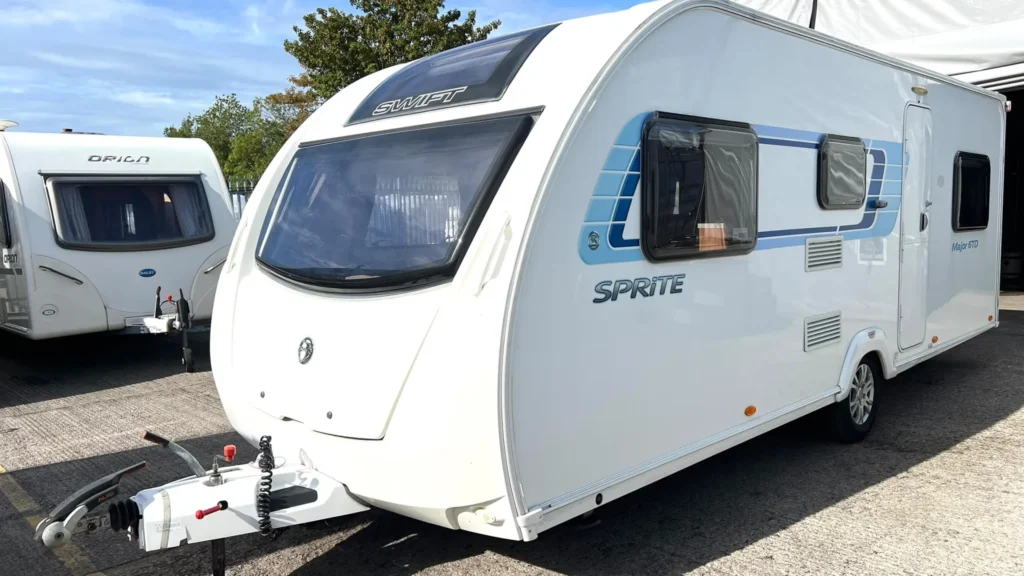
Caravan CRiS
When an owner brings a tourer to our yard on Bayley Street in Stalybridge, the CRiS document is one of the first things we ask to see. CRiS, the Central Registration and Identification Scheme, has run since 1992, and every CRiS caravan record ties one 17-digit VIN to one registered keeper. A dealer, an insurer and the police all lean on that link when they need to know exactly which caravan is in front of them.
This guide covers the number, the paper document, the stickers and chips, and what the register can and can’t prove. Two step-by-step guides sit underneath it: caravan CRiS registration, for when you register a caravan or change keeper, and the caravan CRiS check, a history check worth running on any pre-owned van before money changes hands.
What Is CRiS on a Caravan?
CRiS is the national register for touring caravans built in the UK: it links each caravan’s unique 17-digit VIN to its registered keeper, much as the V5C logbook does for a car.
Caravans aren’t registered with the DVLA, which is why the industry set up CRiS for caravans in the first place. Most owners call the paper Touring Caravan Registration Document their caravan certificate, and that’s fair shorthand. It’s the record touring caravan keepers rely on when they sell, insure or tour abroad.
UK-built vans from 1992 onwards were automatically registered when they were built and first sold. Imported vans built outside the UK weren’t, and go through a separate Import process, which we cover further down.
The same number is marked on the van itself. It’s etched into the bottom right-hand corner of the windows (the front windows may not carry it), shown on the habitation door and stamped on the chassis. Newer caravans add hidden electronic chips and microdots.
Registration does four jobs. It proves keepership, it lets an insurer confirm the van it’s paying out on, it gives manufacturers a route to keepers for product recalls and warranty work, and it helps police and other enforcement agencies identify stolen caravans.
What Does CRiS Registration Actually Prove?
CRiS registration proves who the registered keeper of a caravan is, not who legally owns it, so the record is evidence of a connection to the van rather than proof of ownership. That distinction catches people out. The register holds keeper details and the VIN, and it’s recognised by regulatory bodies, insurance companies and police forces, yet it’s an industry-run scheme set up by the National Caravan Council, not a government one.
Records also go stale. A caravan nobody has transferred can still show the previous keeper years later, and the new keeper may not find out until they come to sell. In a Caravan and Motorhome Club member survey, 30% of those who had sold a caravan said they hadn’t told CRiS.
The record is backed by markings the police can read. The latest chips can be picked up by a scanner from up to 15m away, even while the van is moving.
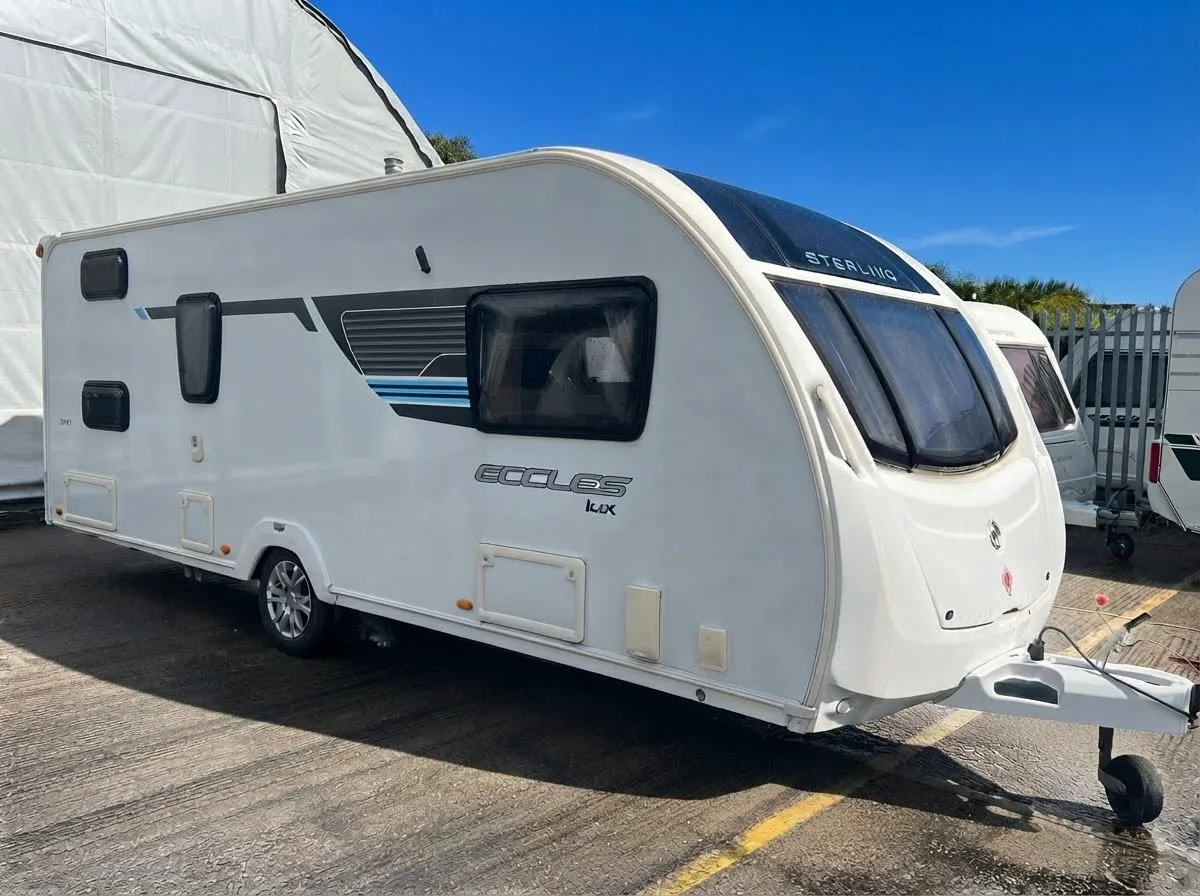
On our yard, the CRiS document is one half of a test. Our engineer reads the 17-digit chassis number on the A-frame or the window etch and checks that it matches the document, as one of the six checks in every valuation. If the two don’t match, that has to be explained before any sale goes ahead.
Where Is the CRiS Number on a Caravan?
The CRiS number on a caravan is usually in three places: etched into the windows, on the main habitation door, and stamped into the chassis, most often on the A-frame.
Start with the glass. Walk round the van and look in the bottom right-hand corner of the side and rear windows; the front windows may be blank. On 2016 models onwards, the number moved onto tamper-evident VIN CHIP window stickers inside the front window and in the front locker, with a QR code that brings the details up on a phone. Then take a torch to the A-frame, where the stamping can hide under paint or road grime.
You’re looking for all 17 characters, something like SGBS000BYA1234567 on a single axle Bailey (a twin axle van swaps that S for a T). Characters are easily confused at a glance: a 0 read as an O, or a 5 read as an S. A replaced window may carry no etching at all, which is why the glass alone never settles anything.
What Does a CRiS Caravan Number Look Like?
A CRiS caravan number is a 17-character string of letters and digits, and each block of it carries one fixed piece of information. The example from the last section breaks down like this:
| Characters | Example | What it tells you |
|---|---|---|
| 1–2 | SG | Where it was built (SG = UK) |
| 3 | B | The make (B = Bailey) |
| 4 | S | Axles (S = single, T = twin) |
| 5–7 | 000 | Optional maker data, often the model |
| 8–9 | BY | The maker (BY = Bailey) |
| 10 | A | Year of manufacture code letter (A = 2010) |
| 11–17 | 1234567 | The van’s own unique number |
The number must be exactly 17 digits; CRiS won’t recognise anything longer or shorter.
The two-letter maker block is the quickest sanity check on an advert. Among the NCC member companies, SW is Swift, EL is Elddis, CM is Coachman, LU is Lunar, CU is Sprite, BU is Buccaneer and CP is Compass. A van sold as one make with another maker’s letters in its number should be checked before anything else, in case it has been reported stolen.
The year needs care, because the code follows the caravan build season from 1 September to 31 August. A van built in October 2010 carries B, the 2011 code, which is why the year in an advert and the caravan’s age on paper can be one apart.
How Do You Work Out a Caravan’s Age From Its CRiS Number?
You work out a caravan’s age from the date letter, the tenth character of its CRiS number, which gives the model year rather than the day it was built. The characters before it set the scene: the first two are the World Manufacturer Identifier (WMI), with SG meaning manufactured in the UK, then come the make, the axle letter, any model codes and the two-letter manufacturer code. The seven characters after it are the serial number.
| Letter | Year | Letter | Year | Letter | Year |
|---|---|---|---|---|---|
| N | 1992 | 4 | 2004 | G | 2016 |
| P | 1993 | 5 | 2005 | H | 2017 |
| R | 1994 | 6 | 2006 | J | 2018 |
| S | 1995 | 7 | 2007 | K | 2019 |
| T | 1996 | 8 | 2008 | L | 2020 |
| V | 1997 | 9 | 2009 | M | 2021 |
| W | 1998 | A | 2010 | N | 2022 |
| X | 1999 | B | 2011 | P | 2023 |
| Y | 2000 | C | 2012 | R | 2024 |
| 1 | 2001 | D | 2013 | S | 2025 |
| 2 | 2002 | E | 2014 | T | 2026 |
| 3 | 2003 | F | 2015 |
Year codes N to E (1992–2014) from UKCampsite.co.uk’s CRiS decoder; F to T follow the standard 17-character VIN year sequence. Model years run from 1 September to 31 August. Checked 2 November 2026.
The letters run on a 30-year cycle, so N covers both 1992 and 2022, and P to T cover the mid-1990s as well as 2023 to 2026. Nobody would mistake a 2023 tourer for a 1993 one standing next to it, but a quick look-up from an advert can go wrong, so read the letter alongside the layout and the document.
The model year also tells you what markings to expect. Vans from 1998 onwards may carry hidden chips, and 2016 models onwards should have VIN CHIP stickers. A difference of one year between the advert and the code letter is normal, given the September start; a gap of several years is a question for the seller.
What Is on the CRiS Document, and When Do You Need It?
The CRiS document records the caravan’s VIN, its make and model and the registered keeper’s name and address, and you need it whenever you sell, claim on insurance or tour abroad. CRiS posts it to the keeper. On a brand new caravan the dealer registers the van at no cost, so the paperwork simply arrives; changing your name or address on the record later costs £15.95.
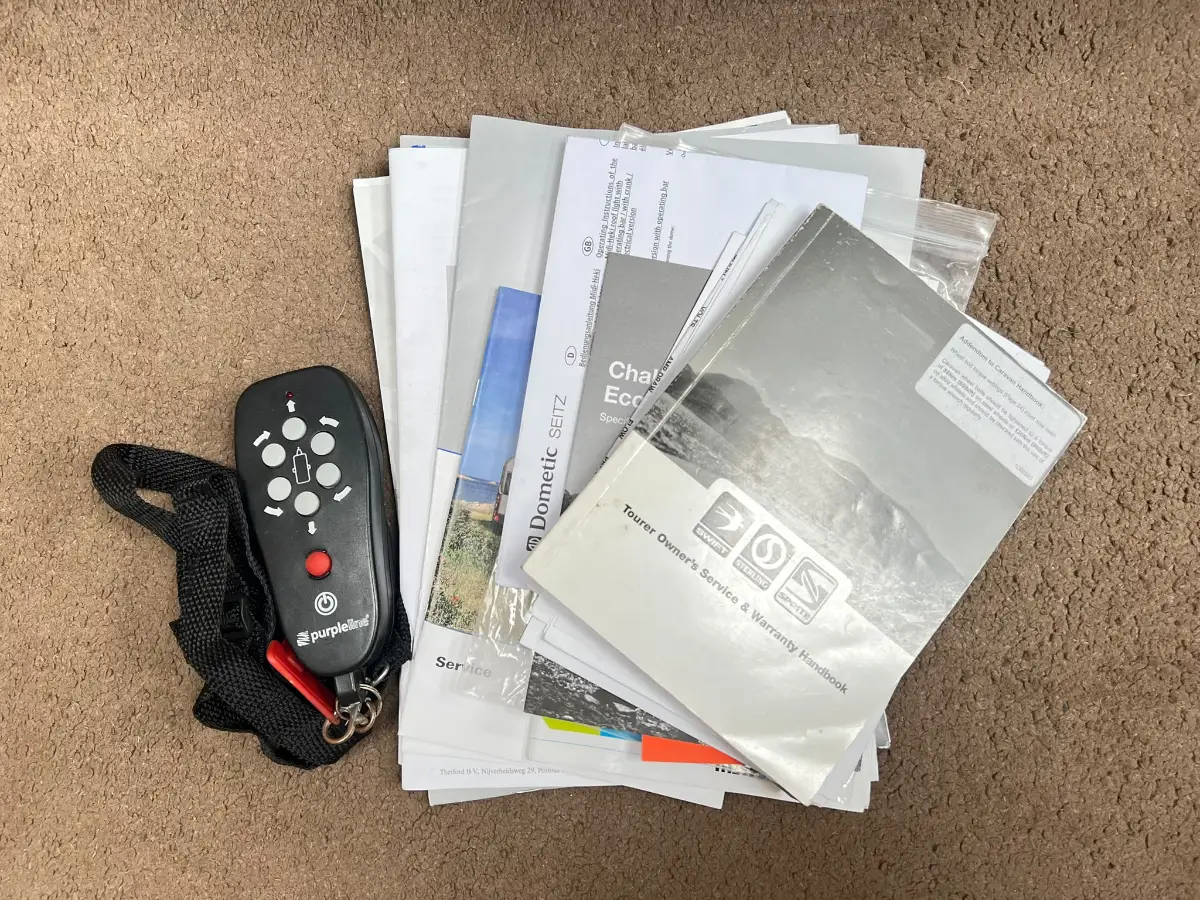
The document matters at three moments. Some insurers will only settle an insurance claim on sight of it. A buyer will want to see it before paying, and the seller must sign and date the Notification of Sale or Transfer section with the buyer’s details. And if a third-party agent ever has to recover your outfit in Europe, border control will want proof of who the keeper is; without it, expect delays. In some countries it’s a legal requirement.
The document won’t show history: an insurer write-off or finance still owed takes a check.
When you sell to us, the CRiS document goes in with the keys, the service book and habitation check records, and nothing is signed over until our bank transfer has landed. It’s part of step four in how to sell a caravan. Keep the document at home rather than in the van: a thief who takes both gets the one thing that makes a resale look genuine.
What Are CRiS Stickers, Etching and VIN CHIP For?
CRiS stickers, window etching and VIN CHIP all put the caravan’s number in places a thief can’t easily change, so the police and other authorities can still identify the van when its paperwork has gone. That’s their whole purpose: to prevent and detect caravan crime.
Each generation adds to the last. Older vans rely on the etched glass and the chassis stamp, with further markers in places such as the door frame or gas locker. From 1998, many vans also carry hidden electronic chips. Since 2016, UK makers have fitted VIN CHIP, which CRiS calls the industry standard in caravan identification; it carries the VIN in both on-show and hidden elements, including the QR code sticker. Owners of older vans can add VIN CHIP, tamper-evident window stickers or microdots as upgrades.
The paper has had the same treatment. Since 2016, CRiS has issued anti-counterfeit documents with a Keep Safe Card carrying the main details, and owners with an older document can order the upgrade.
For a buyer, the test is consistency. A caravan whose etching, sticker, chassis stamp and document all agree is very hard to pass off as something else. One where a set of numbers has been tampered with, or doesn’t agree, is a reason to walk away.
What Does a CRiS Check Show?
A CRiS check tells anyone buying a second-hand caravan whether it has been stolen, written off or still carries outstanding finance, and confirms the details CRiS holds against its VIN. You don’t need to be registered with CRiS to buy one.
The check covers:
- Theft: whether the caravan has been reported stolen to the police
- Write-offs: whether an insurer has written it off
- Finance: whether outstanding finance is recorded against it
- Keepers: how many previous keepers it has had and, where known, the current keeper’s name
- Description: the make, model and age CRiS holds on record
Don’t confuse the check with registration. Registering is a one-off fee of £20.95 that lasts the lifetime of your keepership, with no renewals; the check is a separate fee, paid each time you look at a van. The check reads the CRiS database, so it’s only as good as the record behind it.
If you’re selling, expect a private buyer to run one, and expect any finance to show. When we buy a caravan with finance on it, we settle the balance with the lender from the sale; if more is owed than the caravan is worth, the shortfall has to be covered.
What About Pre-1992 and Imported Caravans?
Caravans built before 1992, and imported caravans, were never automatically registered with CRiS, but both can be added to the register later. A pre-1992 van may carry only the maker’s own serial number, which varies in length, rather than a 17-character CRiS number.
For an older van, CRiS first confirms its age and details and checks it against the security register, then issues a new VIN, a VIN CHIP kit and a registration document. Imports follow a similar route and gain a CRiS-standard 17-digit VIN. A van’s country of manufacture decides which route applies; UK manufactured vans from 1992 onwards are on the register from the start.
We buy touring caravans of all ages, so a pre-1992 van without a CRiS record isn’t a dead end when you sell. Without a CRiS record, we go on the chassis number, any original purchase paperwork and what we see when we inspect the caravan. Our buying service covers UK-built tourers, so if yours was imported, mention it when you ask for a valuation. Static caravans and holiday homes sit outside CRiS altogether, and we don’t buy them.
Questions owners ask
CRiS on a caravan: your questions
How much does CRiS cost?
CRiS registration costs a one-off fee of £20.95 at the time of writing, and a CRiS check costs £17.95. Changing your name or address costs £15.95, and a brand new caravan is registered by the dealer at no cost, with the document arriving within a few weeks. Notifying a sale through the online form at cris.co.uk/selling carries no fee. Paid services take a debit or credit card online or by phone. On a used van, the check fee buys a lot of peace of mind.
Is CRiS registration a legal requirement?
CRiS registration is not a legal requirement for a caravan kept and used in the UK, but some countries do expect proof of keepership, so the document is worth carrying abroad. CRiS’s own advice is to take it with you whenever you tour, because authorities in Europe can ask for proof of ownership and a missing document can cause delays. Many insurers also want to see it before they pay a claim.
What do I do about CRiS when I sell my caravan?
When you sell a caravan, fill in the CVR7 section of the CRiS document with the new keeper’s details, sign and date it, and post it to CRiS, or notify CRiS online; either way there’s no fee. The buyer uses the CVR8 section to register as keeper, which carries a re-registration fee. If the document is lost or damaged, order a replacement or duplicate first, because a full set of papers makes a van easier to sell. Selling to us? We pay by bank transfer before the caravan leaves, and nothing is signed over until the money has landed. Our guide to paperwork for selling a caravan lists everything else to gather.
Why won’t CRiS recognise my caravan’s number?
CRiS only recognises a VIN of exactly 17 digits, so a number that’s too short, too long or misread will fail. Characters are easily confused: a 0 read as an O, or a 5 read as an S, is the usual culprit, so compare the windows with the paperwork. A caravan built before 1992 or abroad may carry a shorter serial number and need registering through the Pre 1992 process or Import process, which includes a provenance check, a VIN CHIP marking kit and a document with a wallet card. If you think a number has been tampered with, call the CRiS contact centre, which can also correct the paperwork where the record is wrong.
What if the number on the caravan doesn’t match the CRiS document?
If the number on the caravan doesn’t match the CRiS document, contact CRiS with both versions before you buy, sell or insure the van. Check the chassis plate against each window first, because a replaced window can cause exactly this kind of confusion. A genuine difference can usually be traced and the record corrected. It’s the same comparison our engineer makes on every valuation.
What should I do if my caravan is stolen?
If your caravan is stolen, report it to the police immediately and get a crime reference number, then tell your insurer and any tracker company, and call CRiS on 0203 282 1000 with your VIN. CRiS records the theft and works with the police so nobody else can register the van. VIN CHIP’s visible and invisible markings act as a theft deterrent and help identification afterwards. The same number handles registrations from the Republic of Ireland.
What’s your caravan worth?
If your CRiS document, chassis stamp and windows all agree, you’re most of the way to a quick sale. Get a free caravan valuation from Samco: we hold your offer for 30 days, collect free within 150 miles of Stalybridge and pay by bank transfer before the caravan leaves.
Get my free valuation