
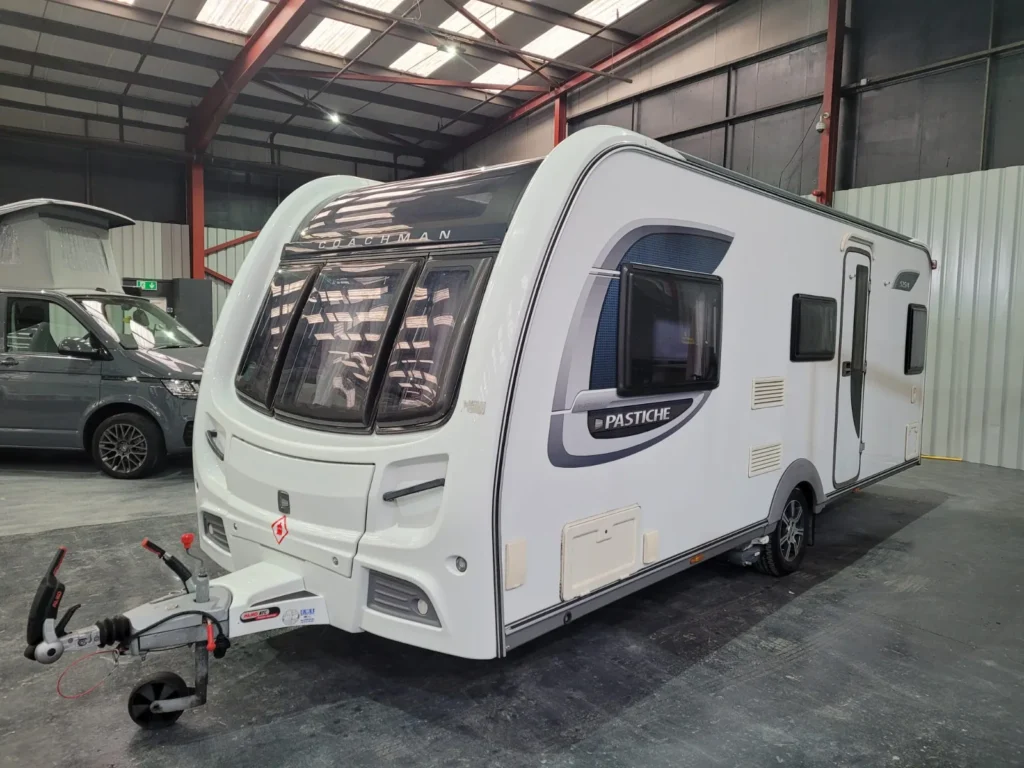
How to sell a caravan
Can I sell my caravan if it’s on finance?
Yes, you can sell a caravan that’s still on finance, as long as the finance is paid off as part of the sale. On hire purchase, the finance company stays the legal owner until the last payment, so the settlement amount has to reach the lender before ownership can pass to anyone else.
That’s the short answer to “can I sell my caravan if it’s on finance”, and it decides who you can sell to. A private buyer has to trust that you’ll clear a debt they can’t see, while a dealer can pay the lender directly. So when you sell a caravan with finance still owing, a dealer is usually the simpler route and an advert the harder one.
This guide is the finance chapter of our step-by-step guide on how to sell a caravan. We buy caravans with finance on them at our yard on Bayley Street in Stalybridge and settle the lender from the sale, so what follows is how it works in practice: who owns the caravan, the settlement figure, negative equity and the paperwork.
Who legally owns a caravan that’s still on finance?
The legal owner of a financed caravan depends on the agreement: on hire purchase, conditional sale or PCP, the lender owns it until the agreement is settled, while a caravan bought with a personal loan is yours from the day you paid for it.
Dig out the finance agreement. The type is printed near the top, under words like “hire purchase”, “conditional sale”, “personal contract purchase” or “fixed sum loan”. If the paperwork has gone missing, log in to your online account or ring the finance provider and ask two questions: what type of agreement is this, and who owns the caravan today?
On the first three, paying the monthly payment makes you the keeper and the user, not the owner, until the final payment clears at the end of the agreement. A personal loan works the other way round. The caravan is yours to sell, and the loan carries on until you repay it.
Here’s how the four common agreements compare:
| Agreement | Who owns the caravan until it’s paid | Shows on a finance check? | What happens when you sell |
|---|---|---|---|
| Hire purchase | The lender | Usually | Settled from the sale before ownership passes |
| Conditional sale | The lender | Usually | Settled from the sale, as with hire purchase |
| PCP | The lender, unless the final payment is made | Usually | The settlement figure includes the final payment |
| Personal loan | You | No | You can sell, and the loan is repaid separately |
Selling for a family member after a bereavement adds one more check. The person named on the agreement, or their executor, has the authority to sell, so the lender will want to deal with them. This is general information, not legal or financial advice: your own agreement is what counts.
Does your CRiS document prove you own the caravan?
No, a CRiS document doesn’t prove you own a touring caravan: it records the caravan’s identity and its registered keeper, and a keeper on hire purchase still isn’t the owner.
CRiS is a security and identification scheme. It ties the 17-digit chassis number to a keeper so that a stolen or cloned tourer can be traced, which is why buyers want to see the document. It just says nothing about money. You can hold a perfectly genuine CRiS document while the lender owns the van.
Finance shows up a different way. A caravan CRiS check tells a buyer whether outstanding finance is recorded against the caravan, and any professional buyer will run one, so unresolved finance comes to light whether you mention it or not. That clean result is what gives a buyer confidence of clear title.
A caravan bought with an unsecured personal loan or a fixed sum loan is different. The loan is a separate debt in your name, not a claim on the caravan, so it won’t appear on the check at all. You’re free to sell, and you keep repaying the loan.
How do you get a settlement figure for caravan finance?
You get a settlement figure by asking your lender for an early settlement quote, which states the exact sum needed to close the agreement on a set date.
The settlement figure is the amount still owed today, not the total of every payment left. Because you’re paying early, the lender takes off interest you’d otherwise have paid up to the original end date, and the quote sets out any interest adjustments and charges. That’s why it’s normally less than adding up what’s left.
Four steps get you a figure you can actually use:
- Ask the lender for it. Have your agreement number ready and ask for an early settlement figure, by phone or online.
- Get it on paper. A figure read out over the phone is hard to hold anyone to, so ask for a letter or email.
- Note the date. Check how long it’s valid for. Lenders usually work the figure to a date about four weeks ahead, because interest keeps adding up.
- Ask again if the sale slips. An outdated figure can hold up a collection day.
Knowing how to sell a caravan on finance really starts here. Until you have the figure, you can’t tell whether a sale clears the debt or leaves a gap.
How does a caravan sale work when finance is outstanding?
A caravan sale with finance outstanding works by paying the lender’s settlement figure out of the sale price and passing whatever’s left to you, before the caravan changes hands.
Done properly, the debt is settled from the sale and nobody has to take anyone’s word for anything. When you sell a caravan with outstanding finance to us, it runs like this:
- We value it. Send photos and details and we’ll usually give you a range the same day, then a firm offer once we’ve taken damp readings in person.
- You send the settlement figure. Check its expiry date sits inside the 30 days we hold your offer.
- We pay the lender. The settlement goes straight to the finance company, and you get confirmation from the lender that the agreement is closed.
- We pay you the rest. The balance due to you arrives by bank transfer, and you watch it land in your own account.
- Then the caravan leaves. Nothing is signed over, and no keys or manuals change hands, until the money has landed. Empty the lockers and any personal belongings before collection day.
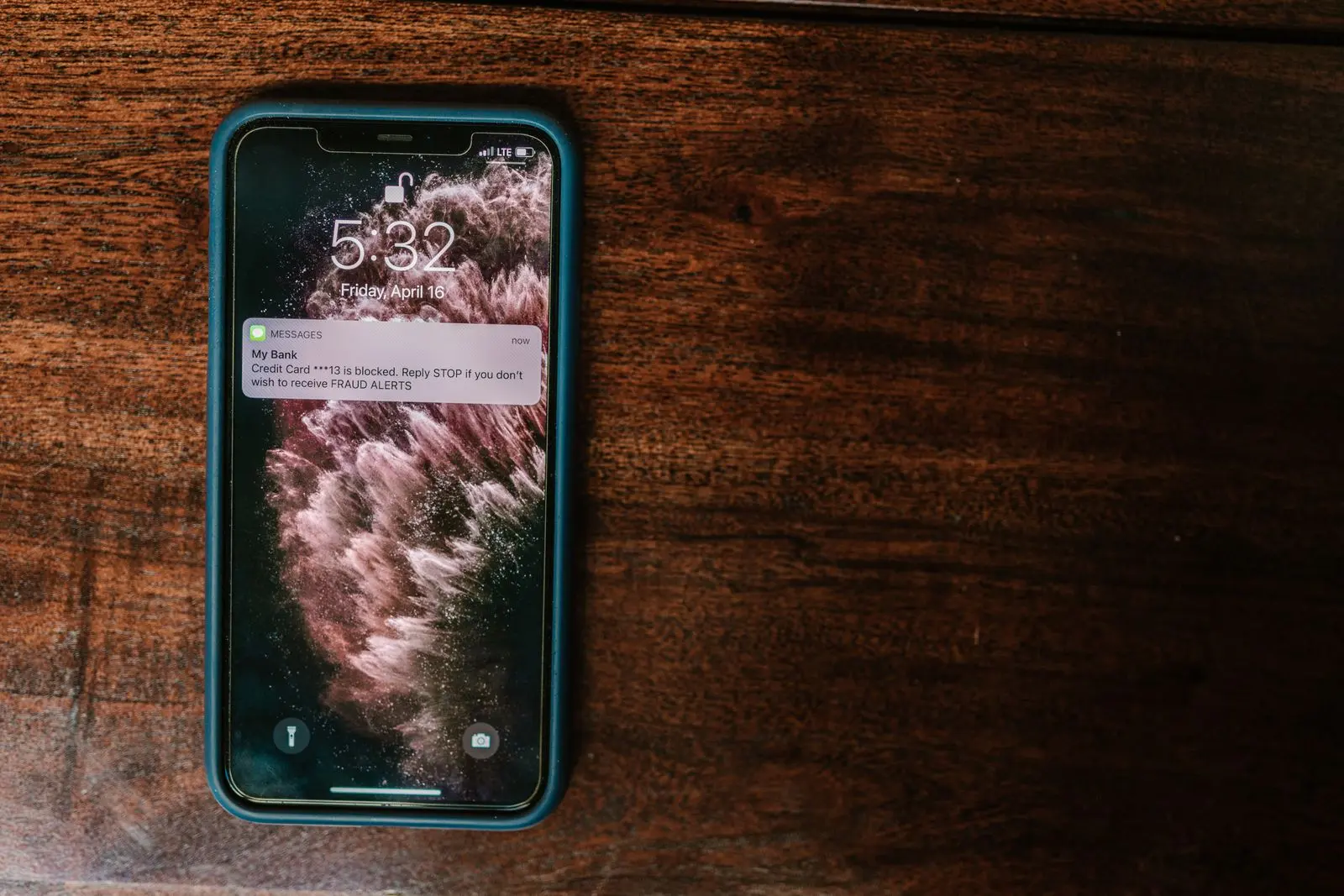
The current value of the caravan sets the offer, and the settlement figure decides how much of it goes to the lender. It all happens in one transaction.
Worked example: settling the finance from the sale
Example figures only, not a valuation.
What if you owe more on the caravan than it’s worth?
If you owe more than the caravan is worth, you’re in negative equity, and the gap between the sale price and the settlement figure has to be paid before the finance can close.
It tends to happen early in an agreement, because caravan depreciation is steepest in the first three years. Condition matters too. An older model, a van with accident damage or one with damp will be worth less, while stamped service records and invoices for work done can narrow the gap.
If your circumstances have changed and you need to sell anyway, you have three realistic options. Pay the shortfall from savings when you sell. Keep up the remaining monthly payments until the figure drops below the caravan’s value, accepting the interest that costs. Or ask the lender about a plan for the difference, and get the lender’s agreement in writing before you sell.
There’s a fourth route on a regulated hire purchase or conditional sale agreement. Once you’ve paid half the total amount payable, the Consumer Credit Act 1974 lets you end the agreement and hand the caravan back, which is known as voluntary termination. It isn’t a sale, though, so you get nothing for the caravan.
None of this means putting your plans on hold for good. Get both numbers first, then make an informed decision.
Can you sell a caravan with finance privately?
You can sell a caravan with finance privately only if the finance is cleared as part of the deal, and that’s much harder to arrange with a stranger than with a dealer.
A careful buyer will run a check, and hire purchase finance shows up on the national asset registers that an HPI check or CRiS check reads. Then they’ll want proof you’ll clear it, usually by paying your lender directly and you the rest, checked with the lender before anything moves. Plenty of buyers stop there.
The risk for the buyer is bigger than with a car. A private buyer who unknowingly buys a vehicle with finance on it can have some protection under Part III of the Hire Purchase Act 1964. That protection covers motor vehicles, which the Act defines as mechanically propelled, and a touring caravan has no engine. If a buyer takes on a tourer with finance still on it, the lender can take it back.
Selling a caravan on finance isn’t illegal when the lender is paid as part of the sale. Hiding the finance is a serious matter, though, and taking cash doesn’t fix anything, because the lender is still owed. Add the months of adverts and viewings, and a direct buyer often makes more sense. Here’s how the two routes compare when finance is owed:
| Private buyer | Selling to a dealer like us | |
|---|---|---|
| Who pays the lender | Arranged between you, the buyer and the lender | We pay the settlement directly |
| Proof the finance is cleared | The buyer has to trust the process | The lender is paid before the caravan leaves |
| How long it takes | Adverts, viewings and waiting | Most sales complete within a few days of first enquiry |
| If the finance isn’t cleared | The lender can recover the caravan from the buyer | It can’t happen: we settle it first |
How does selling a caravan with finance to a dealer work?
Selling a caravan with finance to a dealer works by mentioning the finance at the start, so the lender is paid out of the purchase price and you get the rest.
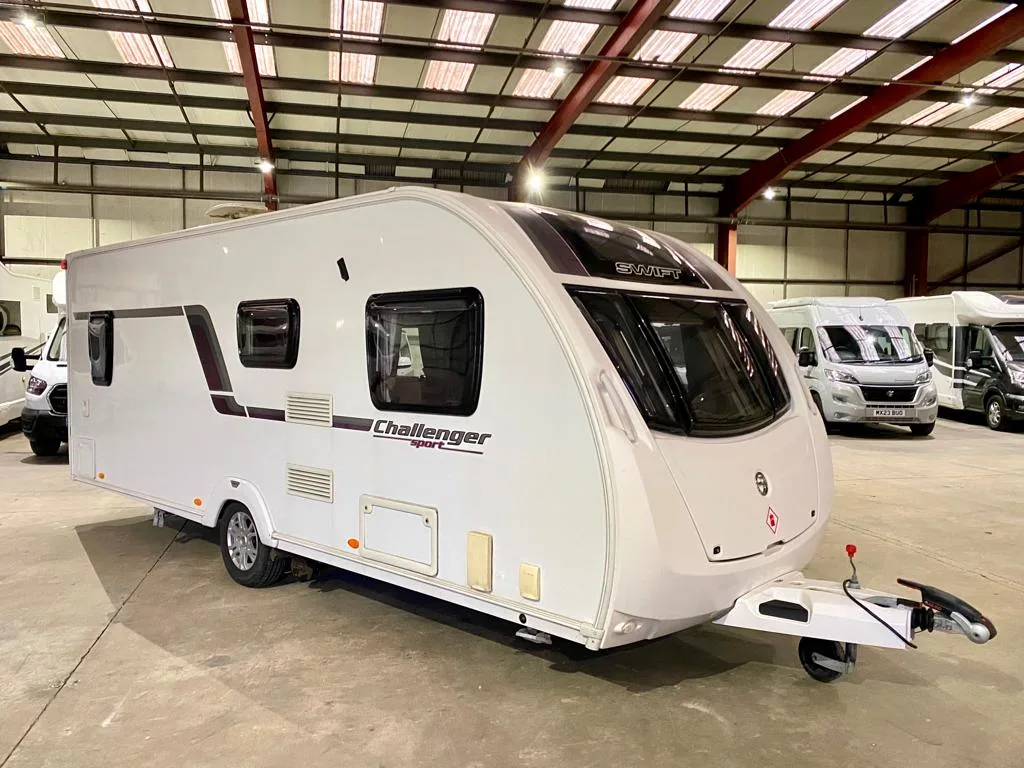
When someone rings us asking “can I sell my caravan on finance?”, we ask for three things: the lender’s name, the agreement number and an early settlement figure. With those we can agree a price, show you what’s left over once the lender is paid and explain the payment route before collection is arranged. An outright purchase carries no fees, so no administration charges come off your share.
The timing lines up well. A settlement figure usually runs for about 28 days and we hold your offer for 30, so both stay good while we inspect, which we arrange within 7 days of your enquiry.
Caravans with outstanding finance are routine for us, and our we buy any caravan service takes tourers of any age or condition. Send photographs inside and out, and bring photo identification on the day. We collect free within 150 miles of Stalybridge, from your driveway, a storage site or a campsite.
One valuation gives you an outright figure and a caravan sale or return estimate, and the finance is settled from the sale either way. We’re transparent about every number: that’s how to sell a caravan with finance without relying on a stranger’s bank transfer.
What paperwork do you need to sell a caravan on finance?
To sell a caravan on finance you need the usual sale paperwork plus the lender’s settlement figure, so the buyer can see what’s owed and to whom.
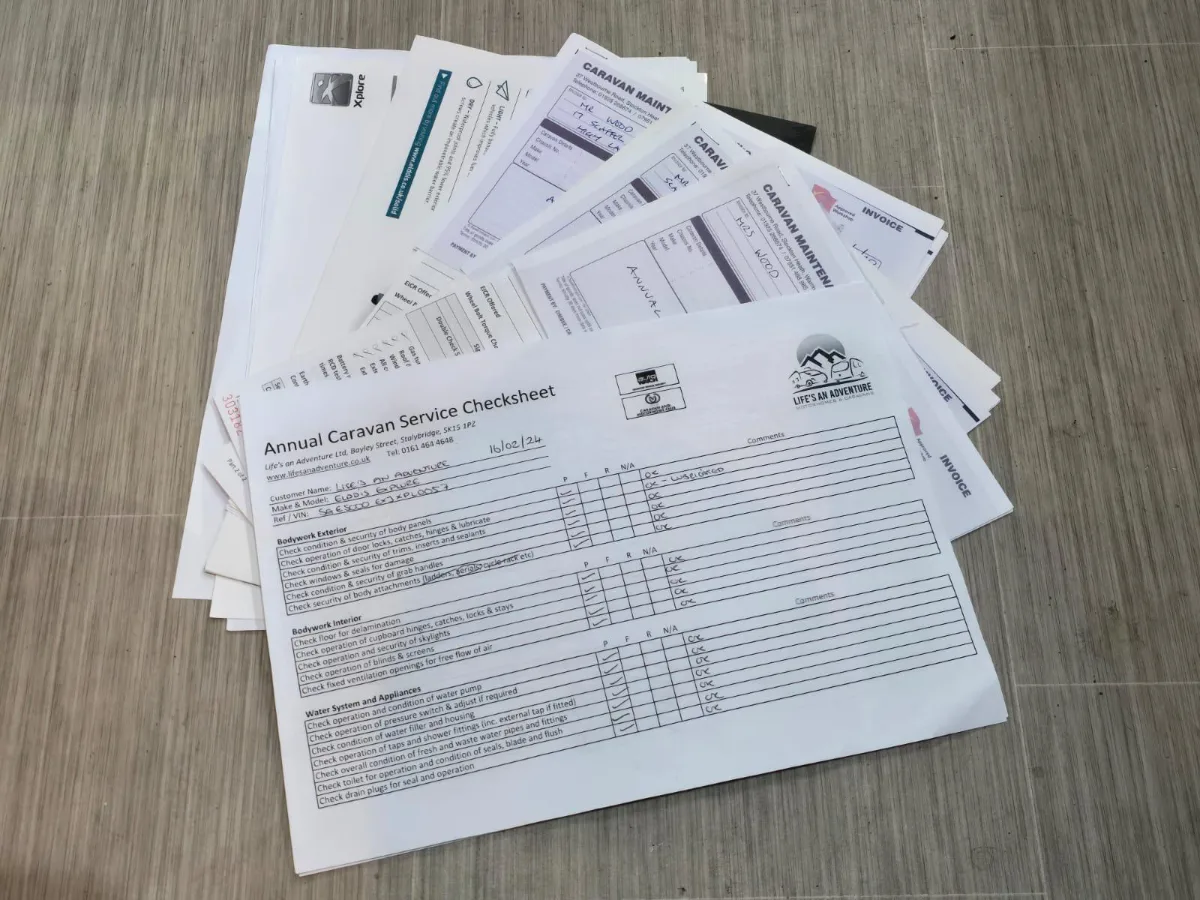
Our full checklist of paperwork for selling a caravan covers the rest, but with finance in the picture these matter most:
- Settlement letter. The lender’s figure, on paper, with the date it runs to.
- The agreement itself. The type is printed on the first page, which tells a buyer whether the lender owns the van.
- CRiS document. The CRiS registration document records the chassis number and keeper’s details. It isn’t proof of legal ownership, but buyers expect to see it, and a touring caravan has no V5C to fall back on.
- Service and habitation records. Stamped books add value, which helps when the margin over the finance is tight.
- Every key. Door, locker and hitch-lock keys, plus any alarm fobs.
Be upfront if something is missing. A lost CRiS document can be replaced, and CRiS is a registration scheme rather than a title register, so a sale to us can go ahead while the replacement is requested.
What mistakes hold up a caravan finance sale?
The mistakes that hold up a caravan finance sale are nearly always about timing and proof: an old figure, an unconfirmed payment or finance that wasn’t mentioned.
The first is working from a figure that has expired. Ask for a fresh figure if the sale slips, and keep everything in writing.
The second is letting the caravan go before money is confirmed in your own banking app. A screenshot of a payment proves nothing, and nor does a deposit paid on a promise that the finance will be “sorted later”. Fake proof of payment is a known caravan selling scam.
The third is keeping quiet about the finance. Buyers who find it on a check often walk away at the last minute, sometimes after the collection is booked.
Two smaller ones. Don’t cancel your insurance until the sale has completed, and don’t assume damp rules out a sale. We buy caravans with damp, we show you every meter reading, and your damp-test paperwork helps us price the work fairly.
Questions owners ask
Selling a caravan on finance: your questions
Can I sell a caravan on PCP finance?
Yes, you can sell a caravan on PCP finance, but the settlement figure normally includes the final payment, so it can be higher than people expect. Personal contract purchase leaves the lender as owner unless that final payment is made. If the sale price doesn’t cover the figure, the shortfall is yours to pay. Owners who want to upgrade often do it through a part exchange, so the settlement comes out of the allowance.
Do I have to tell a buyer my caravan has finance on it?
Yes, tell any buyer about the finance, and tell them from the first conversation. You can’t legally pass ownership of a caravan the lender still owns, and a check will find the finance anyway. Advertising it as finance-free when it isn’t leaves you exposed: the lender can recover the caravan from a buyer who paid in good faith, and that buyer can pursue you for their money.
Is it illegal to sell a caravan with finance on it?
No, it isn’t illegal to sell a caravan with finance on it when the finance is settled as part of the sale: that’s an ordinary, lawful sale. The problem is selling without settling. On hire purchase or conditional sale, the lender keeps a financial interest in the caravan, so selling a caravan with outstanding finance and keeping the money breaches the agreement. So, can you sell a caravan if it’s on finance? Yes, openly. For reassurance, give the buyer the lender’s settlement letter.
Should I wait until the caravan finance is paid off?
Not necessarily: waiting only makes sense if the settlement figure is above what the caravan is worth and you can’t cover the gap. If you’re early in the agreement or put down a small deposit, the gap can be large, and waiting until the balance is lower may suit you. Don’t stop paying in the meantime, because missed payments hurt your credit record. If you can cover a small gap from savings, selling now saves another season of depreciation. Check the agreement for early repayment fees before you decide.
What’s the difference between outstanding finance and negative equity?
Outstanding finance is any money still owed on the agreement, while negative equity means the settlement figure is more than the caravan is worth. A caravan can have finance outstanding and still be in positive equity, where the sale clears the lender and leaves money over. A tourer that’s been sitting on the drive for a couple of seasons can be in either position, so get both figures before you decide.
Can I part exchange a caravan that’s still on finance?
Yes, you can part exchange a caravan that’s still on finance: the lender is settled out of your part-exchange allowance, and the rest comes off the price of your next caravan. If you’ve had your touring days in this van but want to keep touring, it’s the tidiest way to change, with no gap between caravans. You can trade in against any caravan, motorhome or campervan in our stock. If you’d rather sell first, brokerage (sale or return) and outright purchase settle the finance from the sale too, so selling a caravan with finance works on every route we offer. Our caravan part exchange page explains how it works.
What’s your caravan worth?
Got a figure from your lender? Send us your caravan’s details and photos for a free caravan valuation, and we’ll show you what’s left once the finance is settled. Your offer is held for 30 days, we collect free within 150 miles of Stalybridge, and we pay by bank transfer before the caravan leaves.
Get my free valuationCall 0161 464 0109